MATCH
Tinder-like dating game
Overview
You play as a human, stuck in a world just trying to find love and repopulate the planet. However, recently monsters have been infiltrating dating apps pretending to be humans, to lure them in and kill them. You must traverse the trials and tribulations of finding love, while ensuring that you don’t find yourself becoming someone’s next meal.
Play it on Itch.io
Gameplay
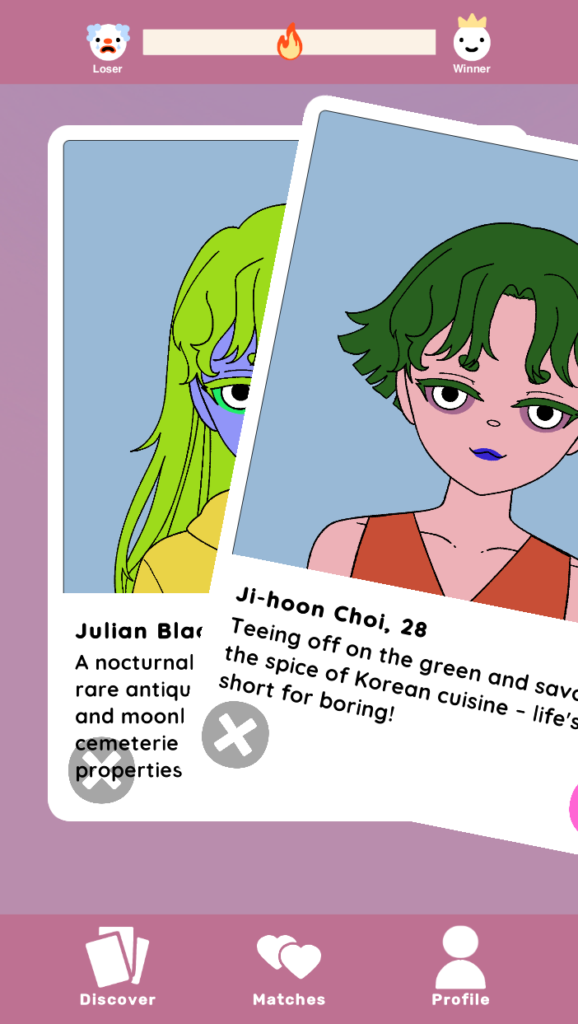
The core loop revolves around swiping and chatting to identify potential matches. Players’ goal is to match with as many real humans as they can before either getting banned from the application or being murdered by a monster.
- Social Deduction: Players will have to use visual and conversational clues when swiping and chatting in the app to determine whether or not they believe the character is a monster or not.
- The Risk/Reward of Reporting: If players suspect a monster, they can report them. However, false reports lead to the player being banned from the app, while missing a monster’s true identity results in a “deadly” date.
- Reciprocal Suspicion: AI-driven human characters are also on the lookout for monsters. If the player asks suspicious questions or behaves erratically, the human NPCs can report the player, leading to a game over.
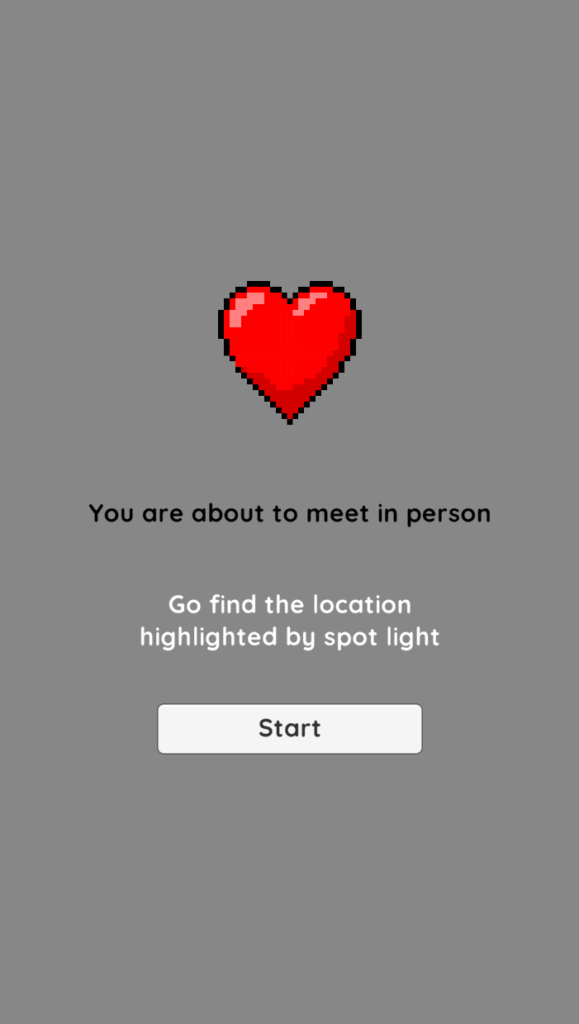
- The Date: If chemistry is high, the player can go on a date, where the match’s true form is finally revealed.

Design Goals & Iterative Process
The primary objective was to architect a central Character Generation Agent capable of managing a diverse ecosystem of NPCs. Those NPCs, each with unique personalities and hidden agendas, do not cross-contaminate data between agents.
The first iteration of the character-generation agent could effectively generate a bunch of characters, but all the characters felt the same. All vampires like ancient art, raw meat, moon, and blood. While a simple glance could tell that something was wrong with this character, that was what I intended for the low difficulty level at the beginning of the game: those characters don’t have any personalities, and are full of vampire stereotypes.
To increase depth, I implemented specific personality traits and a Date Question system. This moved beyond surface-level clichés, providing NPCs with individualized responses while maintaining the subtle, uncanny-valley hints required for gameplay.
In the third iteration, I detailed the character description to further reduce the cliché, including their likes and dislikes for daily activities a normal person would do. More importantly, I utilized negative prompting to explicitly exclude stereotypical traits from non-human characters. Until this point, I’ve successfully created distinct identities that have forced players to look more deeply into conversational subtext.
To complete the level of difficulty separation, I refined the generation prompts to procedurally restrict how much self-identity a monster would hide. By layering negative prompts at higher levels, I increased the difficulty of the social deduction, making monster masquerades progressively more sophisticated.
UX & Interaction Design
To create a mobile-friendly, addictive, and accessible UX, I focused on building a high-engagement, fast-paced experience, trying to mimic what makes Tinder-like dating apps so popular.
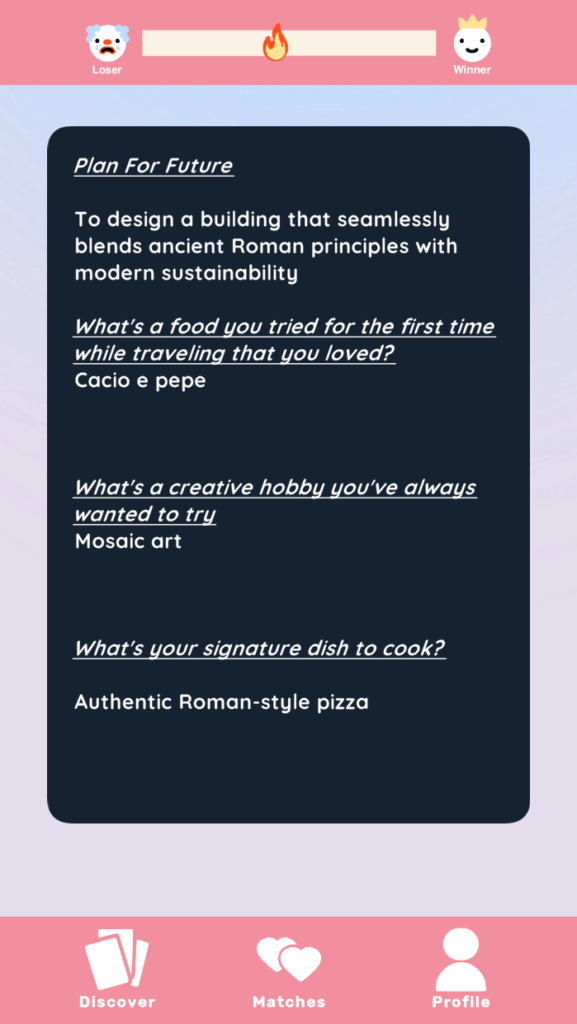
To keep the UI clean and easy to use, I implemented a Progressive Disclosure model. While each character is generated with a rich background of 20+ Q&A sets, only 4 high-interest data points are visible on their character card back.
By withholding detailed background information, I created a mechanical incentive for players to engage in the chat system, where the LLM can dynamically reveal its depth during the Social Deduction phase.
LLM Engineering
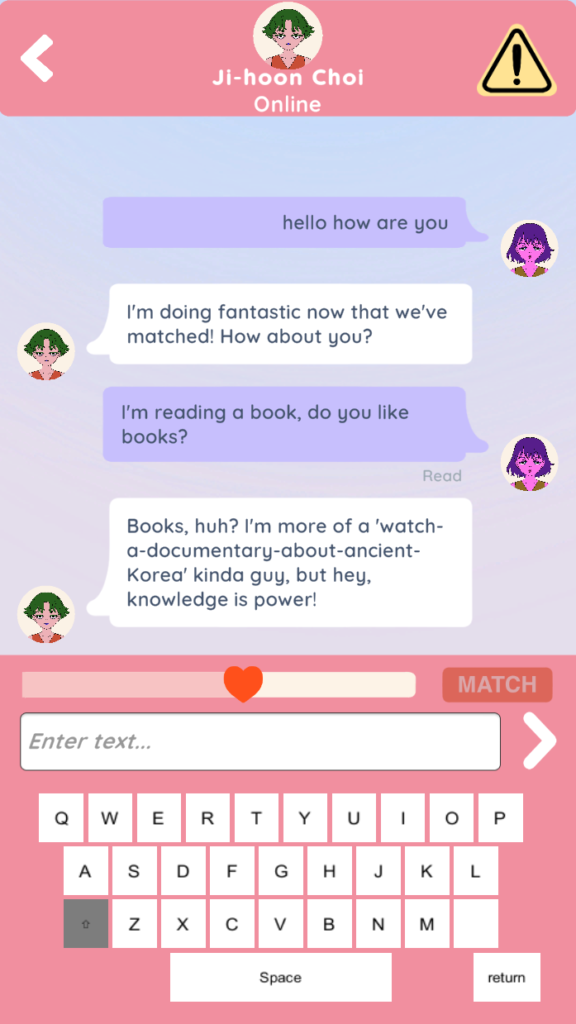
This project uses LLMs to drive dynamic dialogue and a sentiment-based “Favor Meter” that tracks the relationship’s progress.
Monster:
- Would have a prompt utilized to chat with the Monster NPC once the player has matched with them.
- Feed in information and illuminate the unusual parts, but let the LLM freestyle the explanation.
- letting the NPC know they are a monster and they are trying to hide this from the player. If asked, deny it. And try to display to players that they are human.
Human:
- Would have a prompt utilized to chat with the Human NPC once the player has matched with them. Focuses on genuine connection.
- Feed in fields and provide reasonable explanations for parts that are abnormal.
- Letting the NPC know they are a human and are trying to find a real human partner. Thus, they should also determine whether or not players are monsters. Are players asking weird questions? Are players responding suspiciously?
Character Generation:
- Would have a prompt utilized to generate a list of personality traits and likes/dislikes for the NPC, which will be utilized for both Humans and Non-Humans.
- These character traits would be added in to the chat prompt so that it can be utilized and represented in the chat system when the player is chatting with the NPC.